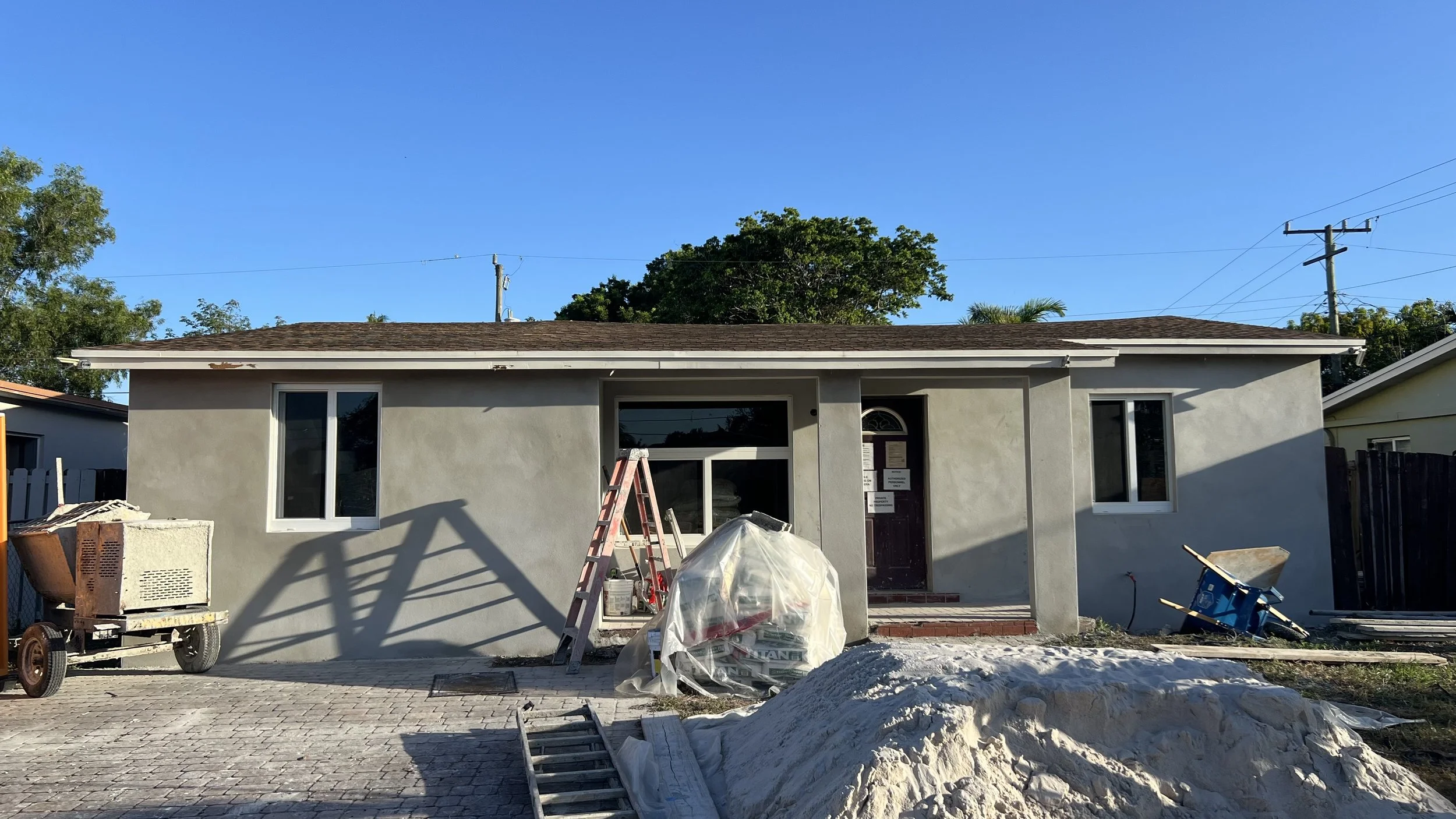
The Re-birth - SFR at Oakland Park
Location: Oakland Park, Florida
Year: 2024-2025
Budget: $475,000
Sq. Ft.: 2,048
Phases Involved: Pre-Design/Programming through Project Closeout.
A single-family detached home that was severely affected by fire damage. The new owner wanted to see if the property could be rehabilitated and fully remodeled. A complex procedure due to in-depth research, code compliance and legal requirements before even the first design sketch is implemented.
The property was built in 1955 and consists of two framing methodologies. The original framing, was done in masonry and a gabled wood framed roof. The expansion was erected using a wood framing methodology and a low slope wood framed roof.
-
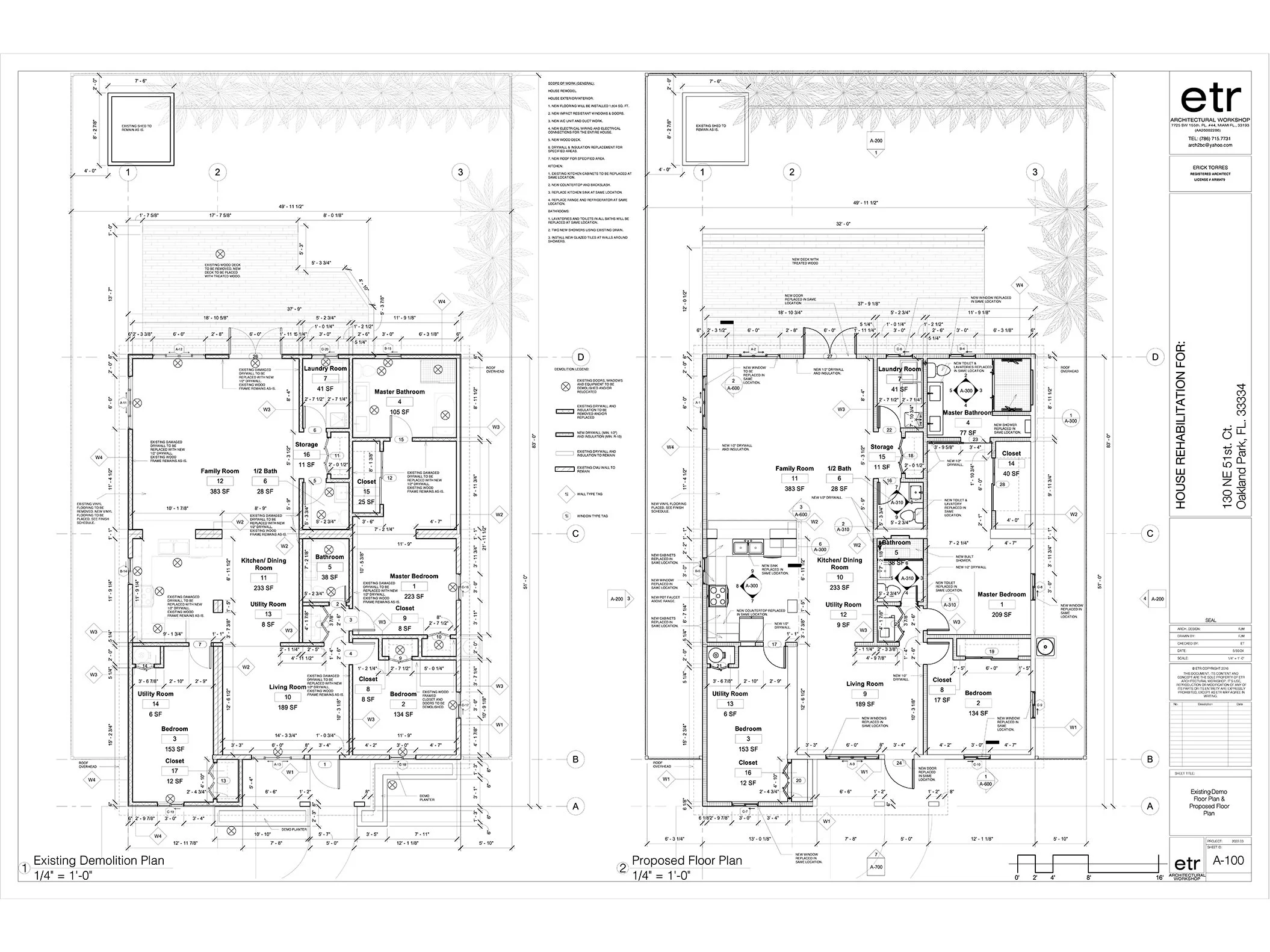
![An image of the floor plan]()
01 Demo Plan and Proposed Plan for project.
-
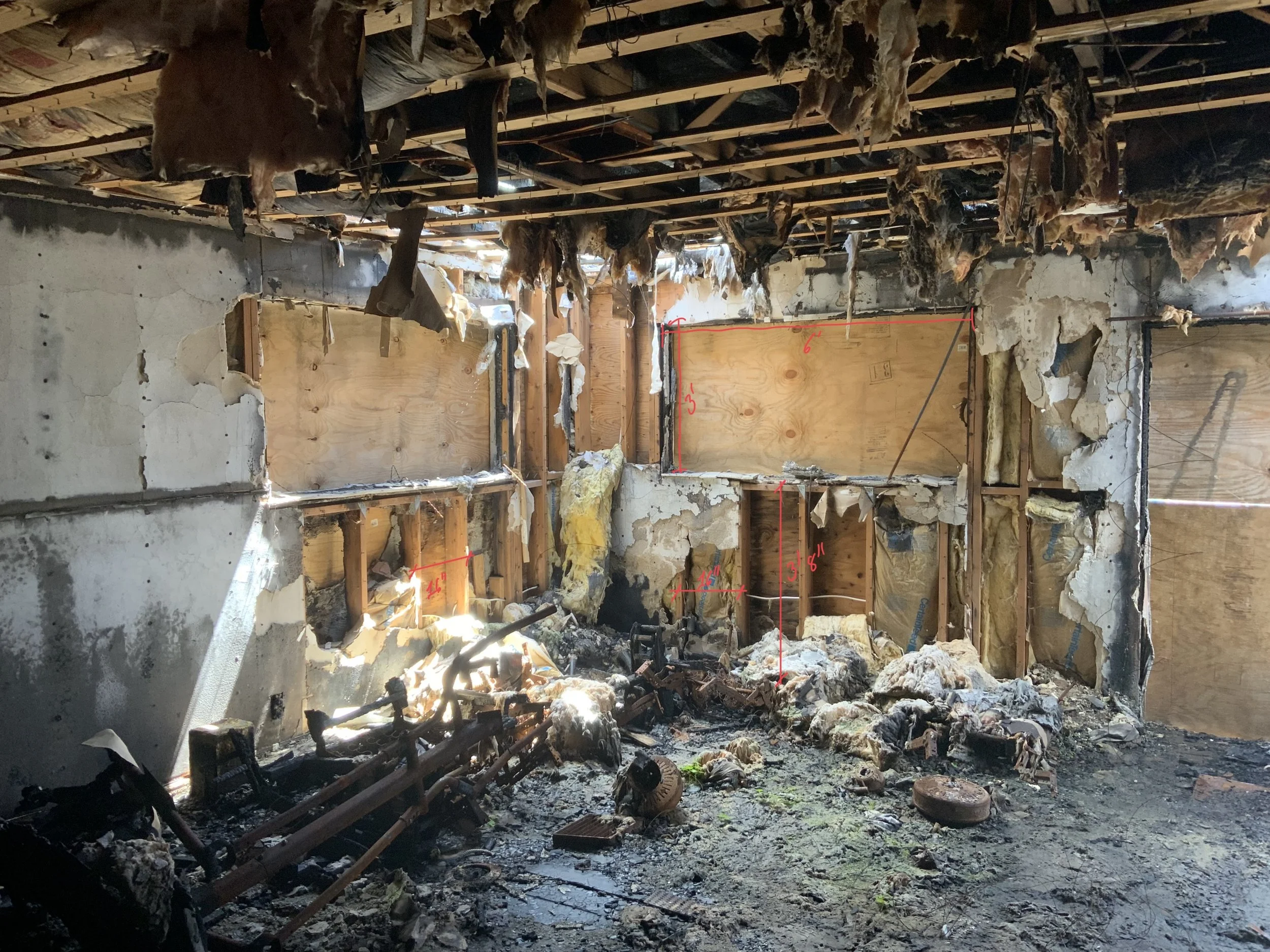
![An image of the Culinary Lab]()
02 Site evaluation and initial analysis of existing conditions.
-
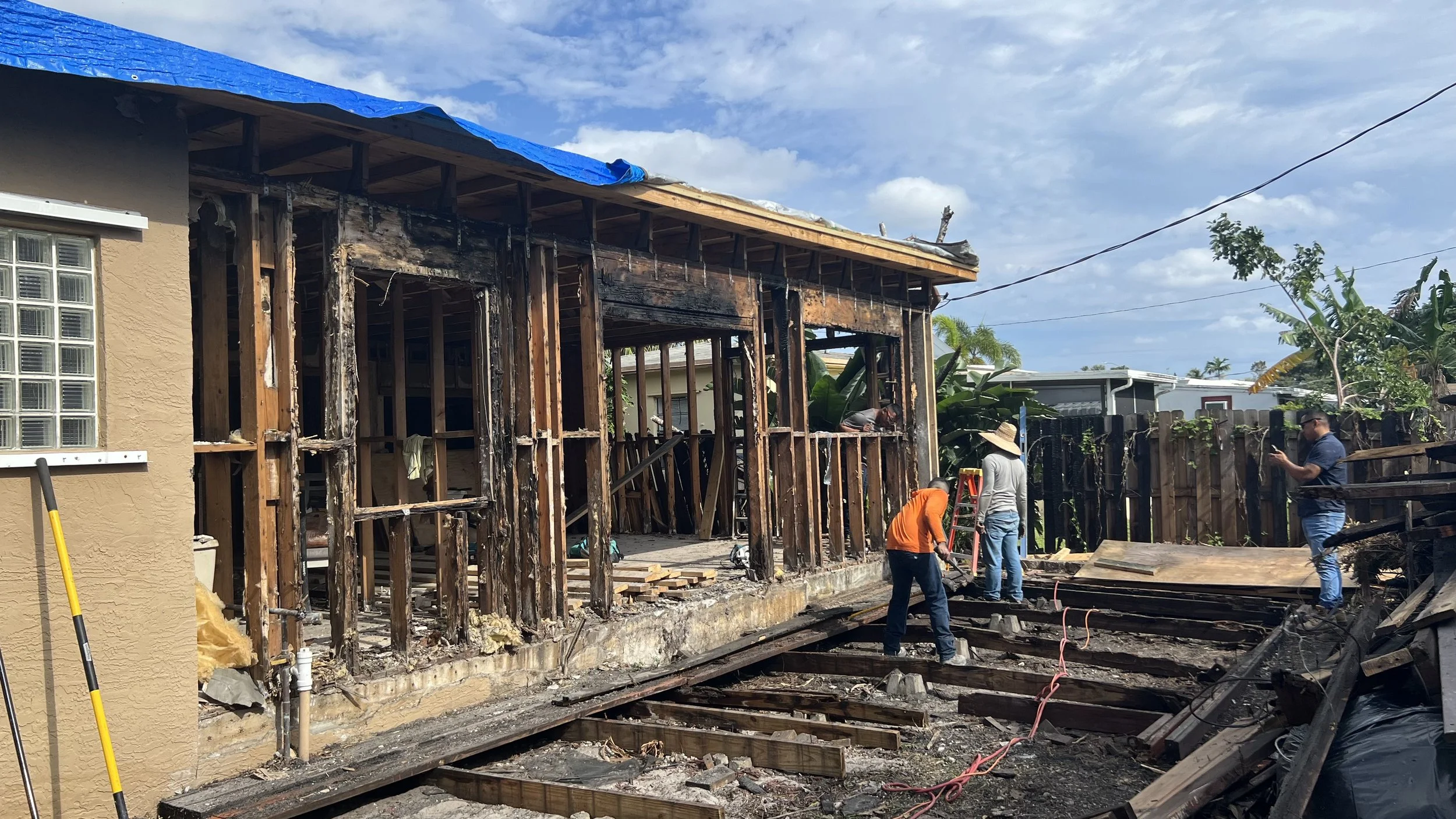
![An image of the Culinary Lab]()
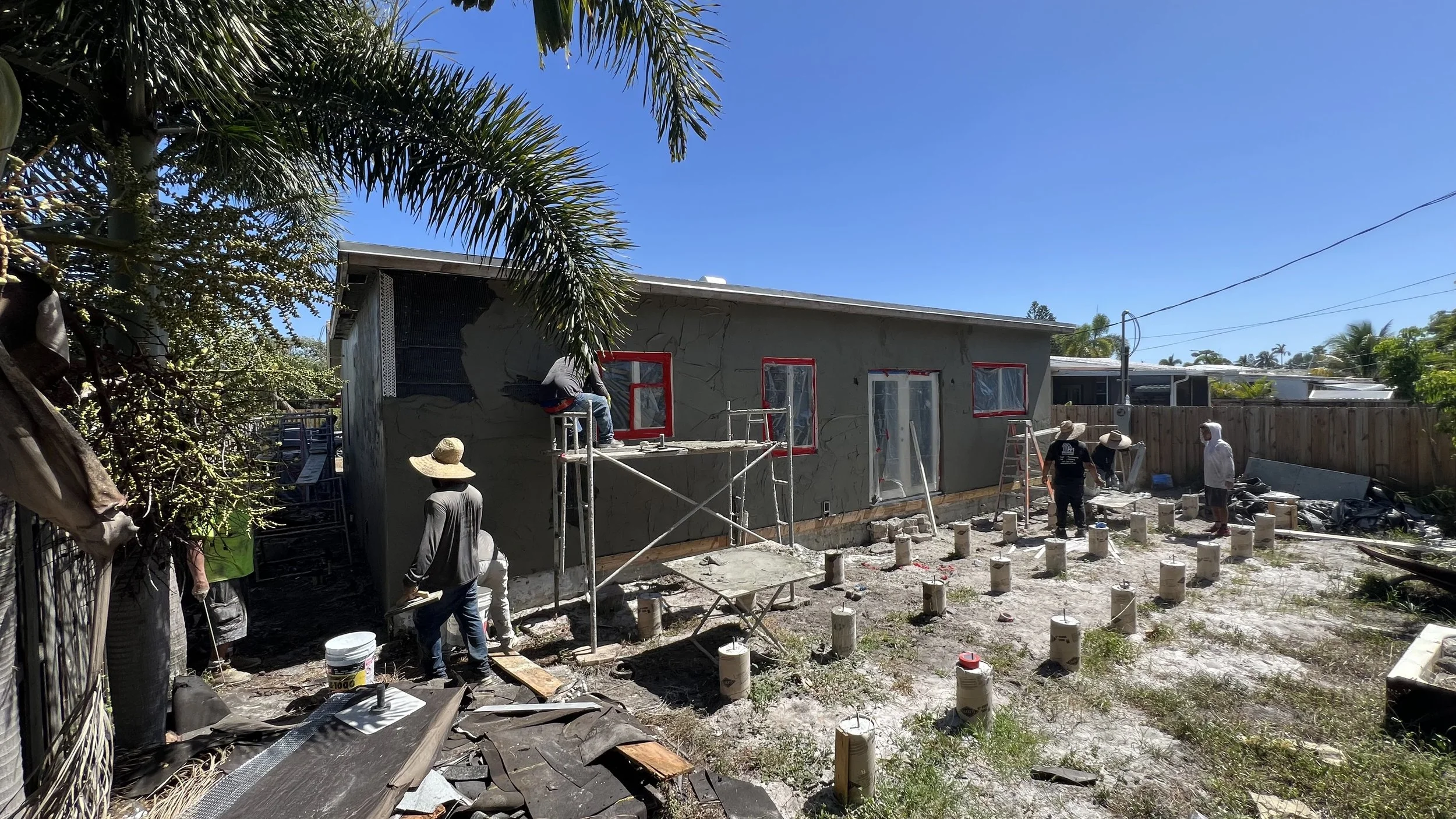
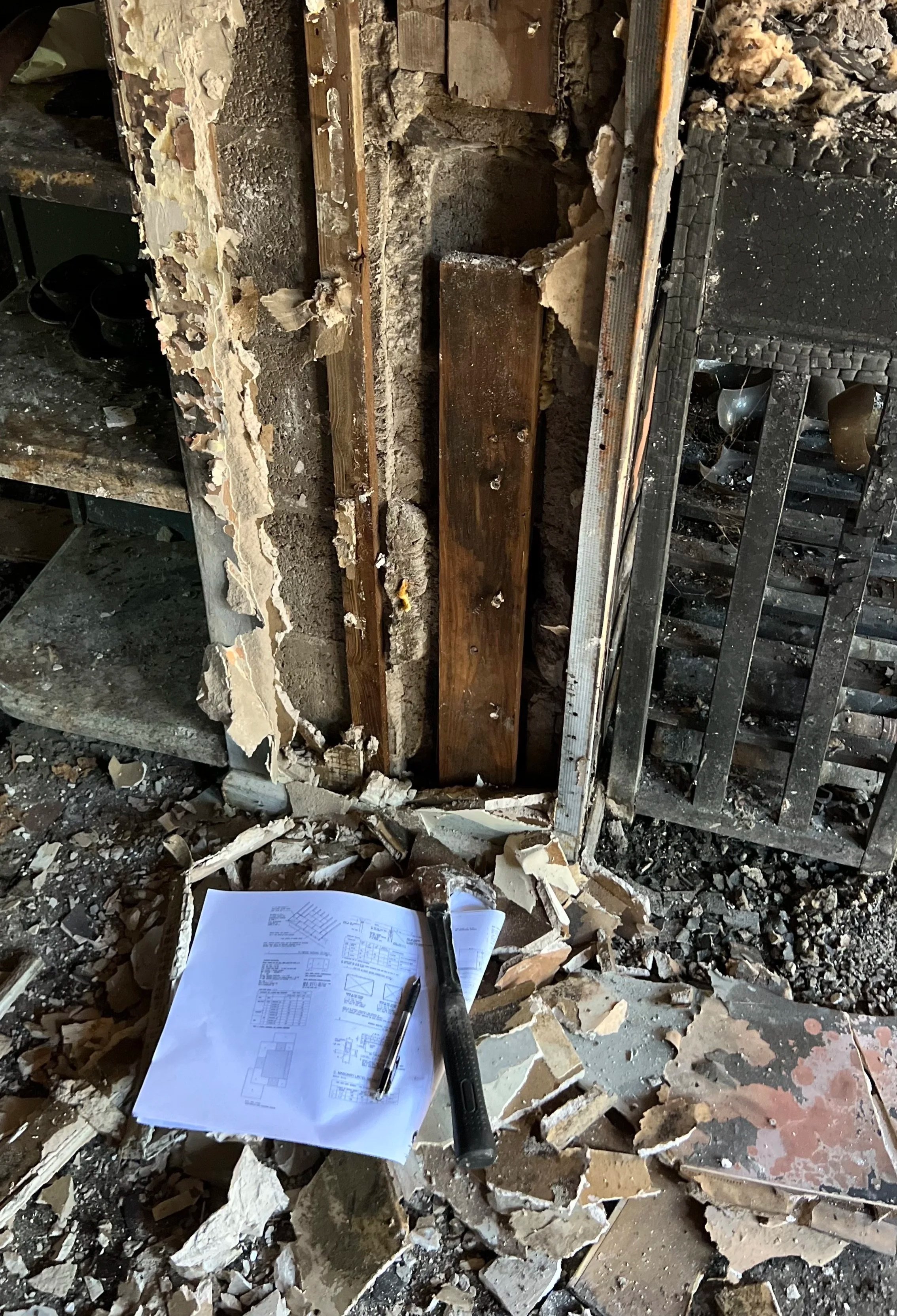
03 Wall and deck framing being removed post fire. Termite damage was also identified in certain areas and was marked for removal.
-
![]()
04 Smooth finish stucco was requested by client for the exterior facades. On-site evaluation of the process and documentation.
Architectural Design - Project Architect
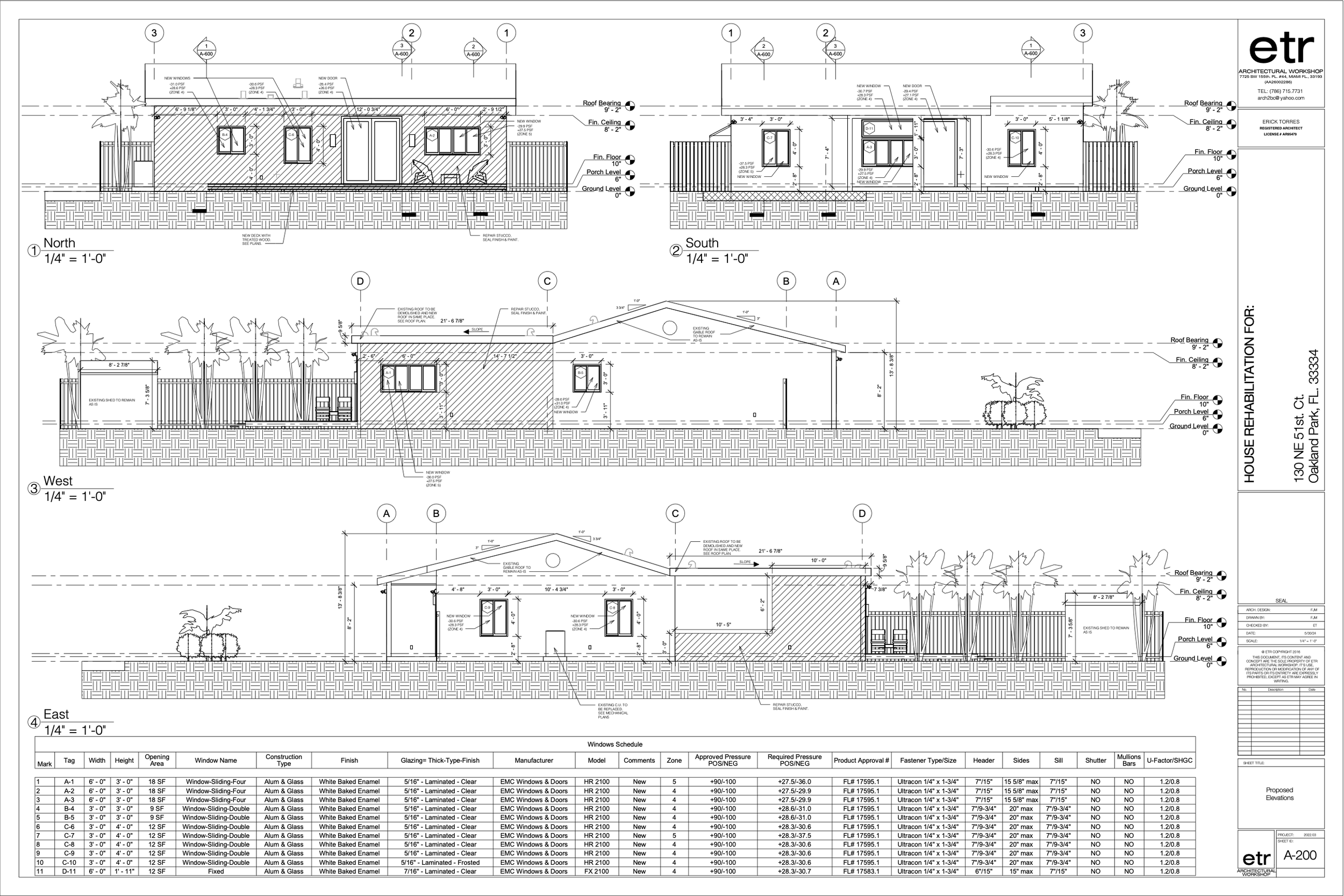
Property measurements and repair indications to the facade. Proposed window upgrades for HZHV impact resistant zone.
Exterior elevations
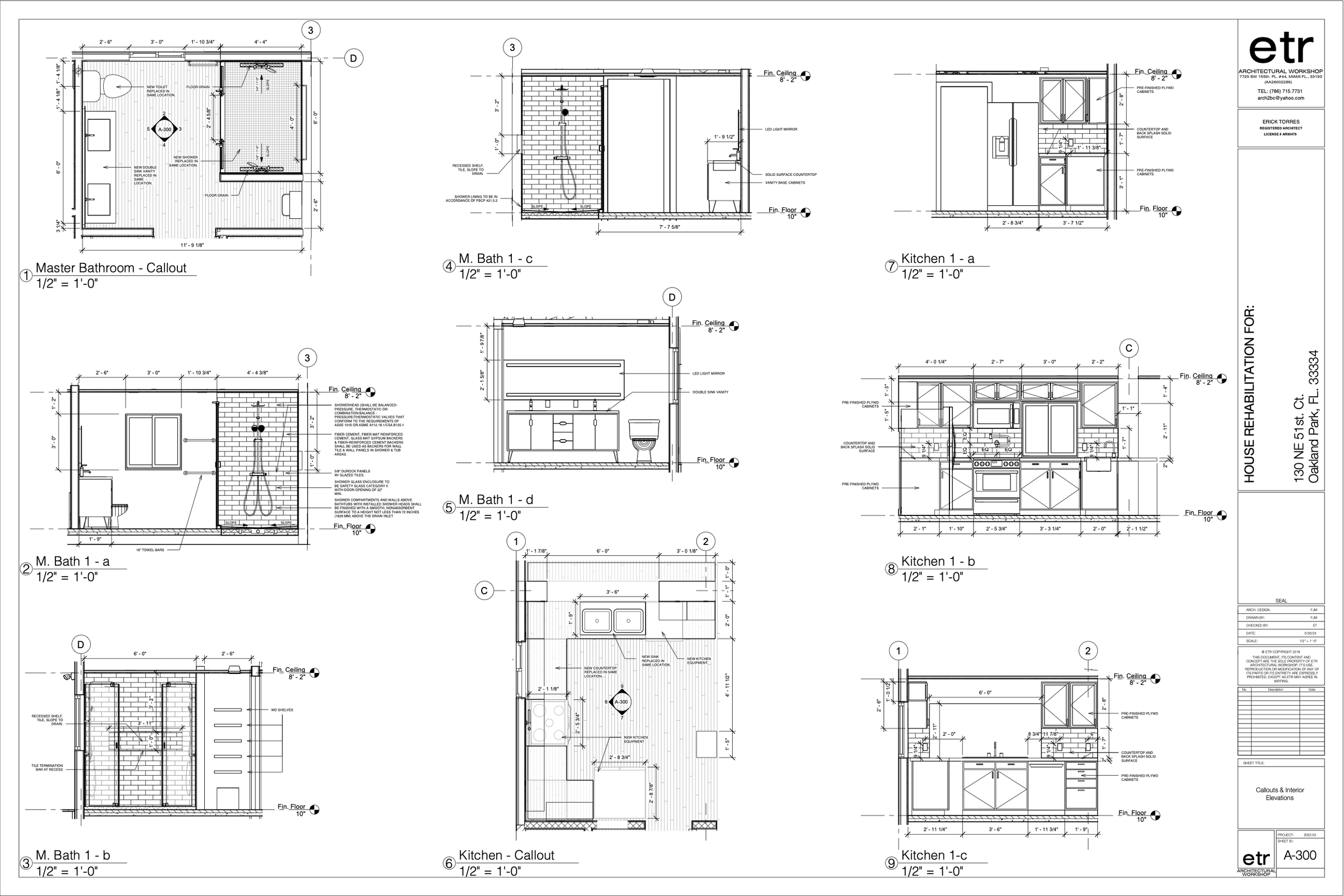
Key areas that highlight the design intent for equipment location and design aesthetics.
Interior elevations and sections
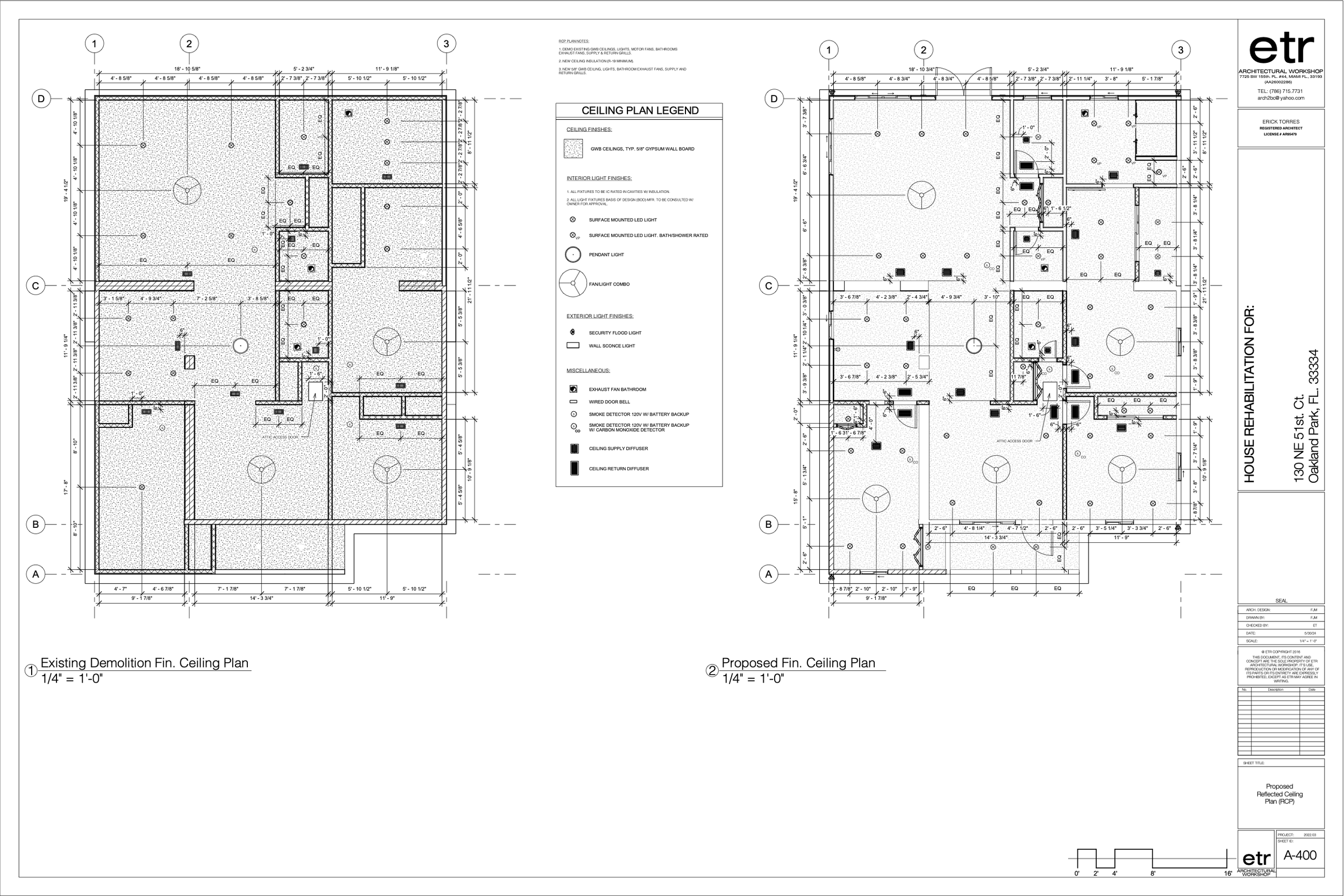
A coordinated plan that includes the HVAC vents and fan/lighting equipment for the new interior space.
RCP plan
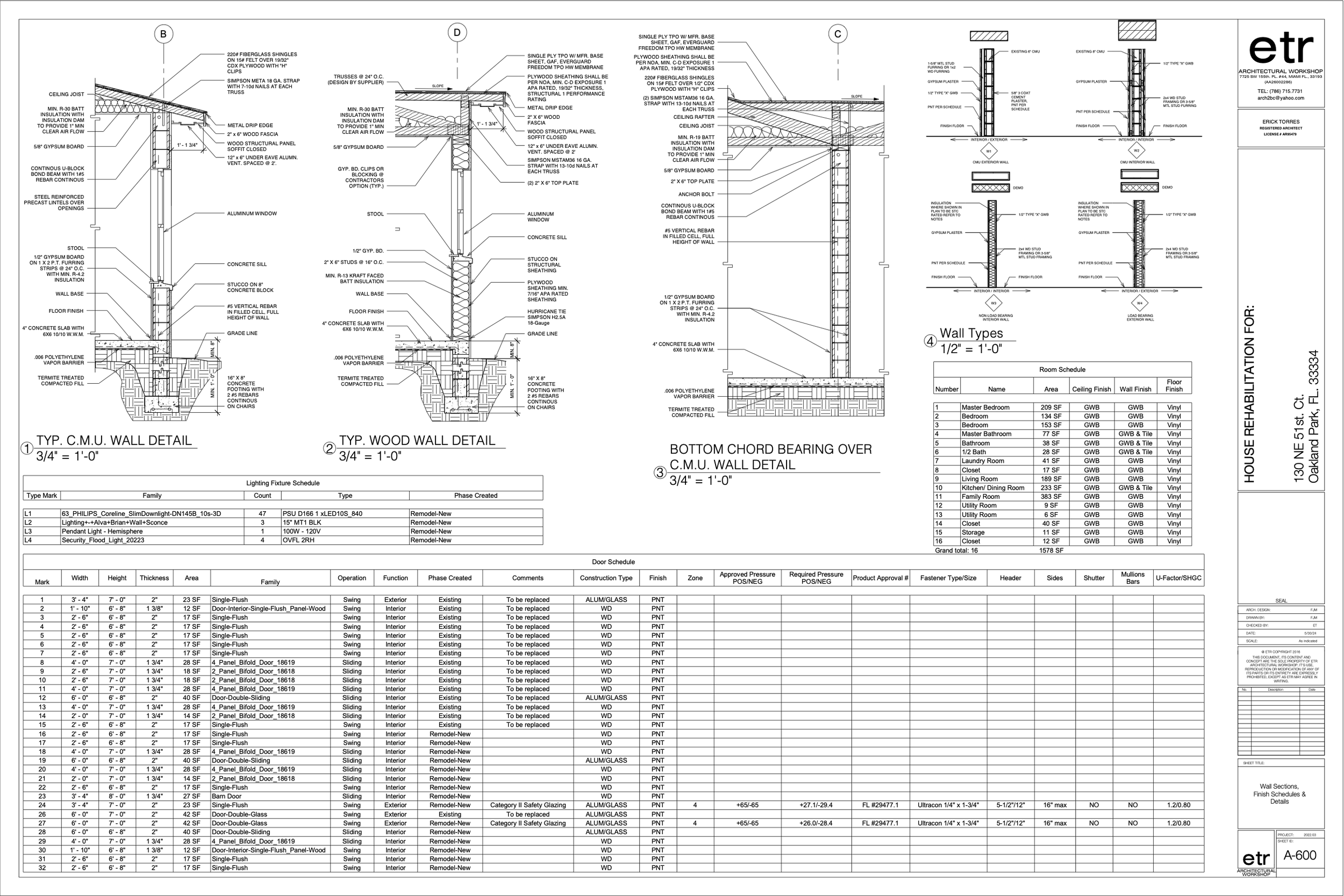
The process of designing that integrates the existing structure and the new add ons that will tie into it.
Wall sections details and schedules
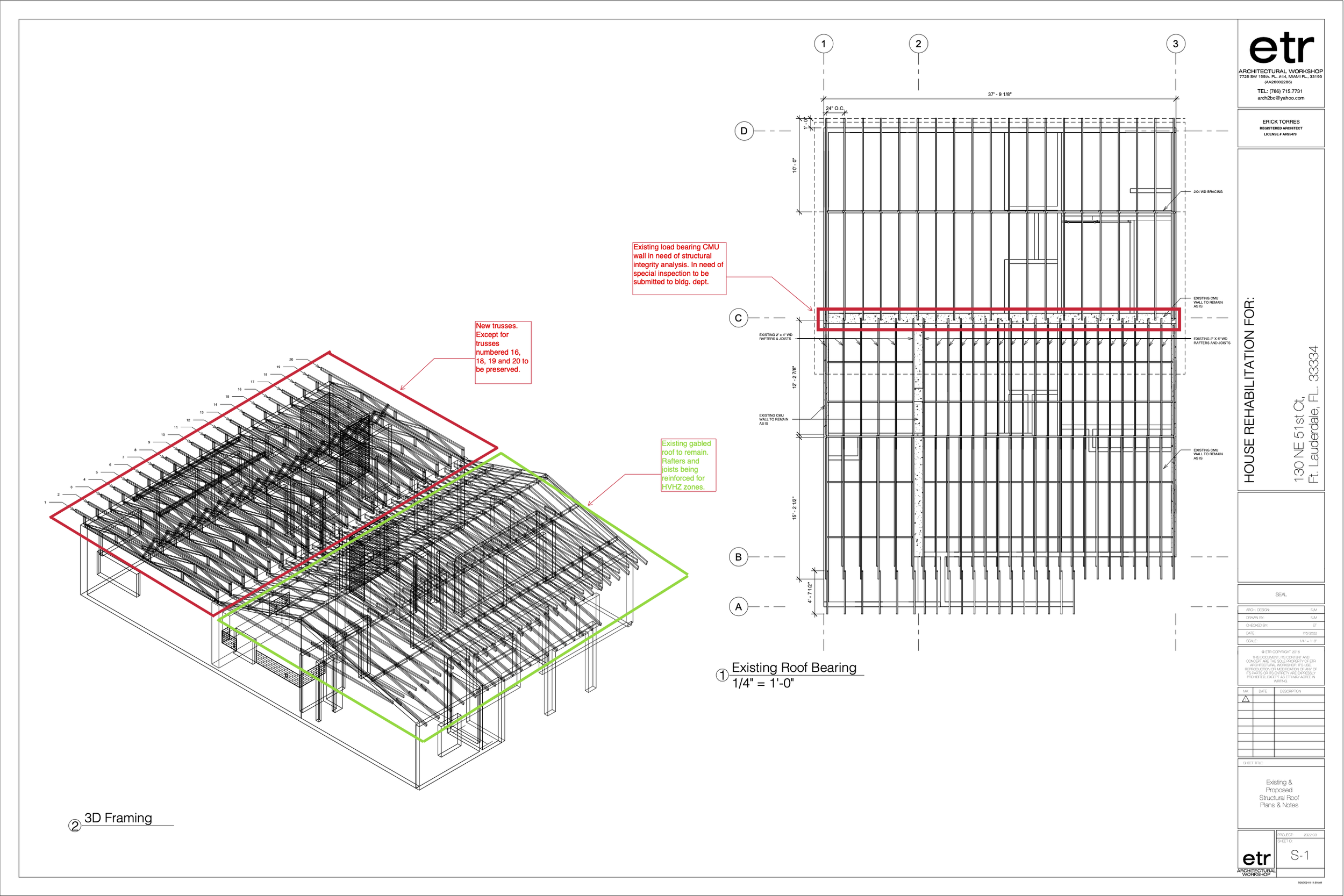
Roof framing coordination
Integrating the existing framing to the new proposed one. Reinforcing the gabled section with hurricane straps and anchoring.
Project Details:
Complete rehabilitation and full interior/exterior remodel of a single-family residence severely damaged by fire. Work includes demolition of unsalvageable structure and finishes, structural stabilization and repairs, complete systems replacement (electrical, plumbing, HVAC), mold and smoke remediation, thermal and moisture barrier restoration, full interior finish (kitchen, baths, flooring, millwork, painting), exterior envelope repair (roofing, siding, windows, doors), and site restoration.
Objectives
Space planning and design by analyzing existing footprint to optimize kitchen, primary suite, and living area adjacencies. Develop architectural blueprints, including floor plans, reflected ceiling plans, and elevations. Select all interior finishes, cabinetry, lighting fixtures, and hardware.
Ensure occupant and worker safety through complete remediation of hazards and compliance with all applicable codes and standards.
Restore and upgrade the home’s structural integrity, building systems, and envelope. Eliminate smoke, soot, and odor; remediate water and mold damage.
Modernize interior layouts and finishes to client program and budget, improving function, aesthetics, and energy performance.
Scope of Work
Immediate Safety & Pre-construction
Hazard abatement: professional asbestos and lead assessment and abatement as required by local regulations.
Structural shoring and temporary bracing.
Demolition and selective removal
Space Planning and Design
Conduct programming sessions to confirm homeowner priorities (room adjacencies, storage needs, lifestyle patterns, future flexibility).
Evaluate opportunities to refine layout (kitchen flow, bath locations, laundry/mudroom, primary suite, WFH space, family gathering areas).
Produce concept design, schematic layouts, and final construction documents.
Define finish schedules, cabinetry layouts, plumbing fixture selections, lighting plan, and appliance package.
Structural Repairs, Building Envelope & Life Safety
Replace or sister compromised framing members, floor joists, roof rafters/trusses, and wall studs to meet structural engineering recommendations and code.
Rebuild roof assembly: sheathing, underlayment, flashing, and final roofing material.
Repair or replace exterior sheathing, housewrap, siding, trim, windows, and exterior doors to restore envelope continuity and weather resistance.
Mechanical, Electrical, Plumbing (MEP)
Install new electrical service, panel, wiring, outlets, lighting, and smoke/CO detection systems to current code.
Replace plumbing supply and drain lines, fixtures, and ensure compliance with local plumbing code.
Install new HVAC system, including ductwork, ventilation, and filtration systems to address indoor air quality and energy efficiency.
Consider upgrades: tankless water heater, high-efficiency HVAC, whole-house air filtration, and mechanical ventilation.
Coordinate all MEP systems with fire restoration scope and inspection requirements.
Insulation, Air Barrier & Energy Upgrade
Upgrade windows and doors for thermal efficiency and safety for HVHZ area.
Bring building elements up to current energy code requirements.
Interior Reconstruction & Finishes
Specify durable, low-VOC finishes for floors, walls, ceilings, millwork, and cabinetry.
Select appliances, plumbing fixtures, lighting fixtures, hardware, and specialty items (fireplace surrounds, closet systems, laundry equipment) as applicable.
Coordinate procurement schedule for long-lead items (cabinets, tile, windows/doors, specialty appliances).
Exterior & Landscaping
Repair and refresh damaged exterior elements (stucco, trim, soffit, fascia, exterior lighting) in affected areas.
Improve entry function and curb appeal with updated door hardware, lighting, address/wayfinding elements, and minor landscape restoration as required.
Restore site elements impacted by construction access (walks, small hardscape patches) as needed.
Inspections, Testing & Closeout
Coordinate required inspections: structural, electrical, plumbing, mechanical, and final building inspection.
Perform final QA/QC with contractor.
Deliverables
Existing conditions survey, damage assessment coordination, and preliminary code/life-safety review.
Schematic design drawings and selected 3D views/renderings (as needed for alignment and approvals).
Construction documents (plans, elevations, sections, details, and outline specifications).
Permitting submittals and agency coordination.
Finish schedules, fixture selections, and appliance/equipment specifications.
Procurement tracking list for long-lead items (cabinets, windows/doors, tile, appliances, lighting).
Commissioning / functional verification checklist for key MEP systems (HVAC performance, ventilation, controls, major electrical loads).
As-built documentation and operation & maintenance (O&M) manuals for installed equipment where available.
Schedule*
Design Phase: 10–12 weeks (programming through construction documents), dependent on complexity and homeowner decision cadence.
Permitting: 4–10 weeks (jurisdiction dependent; may run concurrently with late design where allowed).
Construction / Restoration + Remodel: 16–24 weeks (dependent on extent of structural/MEP replacement and inspections).
Final install + commissioning + punch list: 2–4 weeks.
Total estimated project duration: 32–50 weeks.
*Note: Schedule is sensitive to insurance coordination, remediation scope completion, permit timelines, inspection availability, and long-lead material procurement.
Budget Estimate
Reconstruction Cost: $160–$200 per sq. ft. (varies based on the extent of structural damage).
Remediation & Debris Removal: $25,000–$45,000 (flat estimate depending on severity).
Soft Costs: 15–20% (Architectural fees, structural engineering, and permits).
Owner Contingency: 15% recommended for "hidden" fire damage discovered during demolition.
Assumptions and Constraints
Work may require temporary relocation and protection of any salvaged/undamaged contents.
Fire/smoke/water remediation is assumed to be completed or clearly scoped prior to final construction pricing and start of rebuild.
Structural work is limited to damaged areas unless engineering identifies broader upgrades.
Existing utility capacities are assumed adequate unless inspections reveal service/panel or water supply upgrades are required.
Hidden conditions are likely (behind walls/ceilings, ductwork contamination, electrical junctions); discoveries may affect schedule and budget.
Owner to confirm finish level, appliance package, and scope priorities early to control cost and long-lead procurement.
Project Management - Construction Administration
The process of preserving and restoring an existing structure is inherently challenging: it demands careful research, sensitive decision-making, and skilled craftsmanship to respect original materials and intent while meeting modern standards. Undertaking a project from its inception and guiding it through assessment, stabilization, and thoughtful interventions offers a rare intimacy with the building’s story—discovering hidden features, diagnosing decay, and choosing which elements to conserve or replace. Watching a damaged shell transform—structural weaknesses addressed, finishes revived, systems upgraded—into a renewed, functional space feels like witnessing a rebirth: the past honored, the present served, and a second life secured for future use.
02
01
03
01 Forensic analysis of structural components to determine extent of fire and water damage .
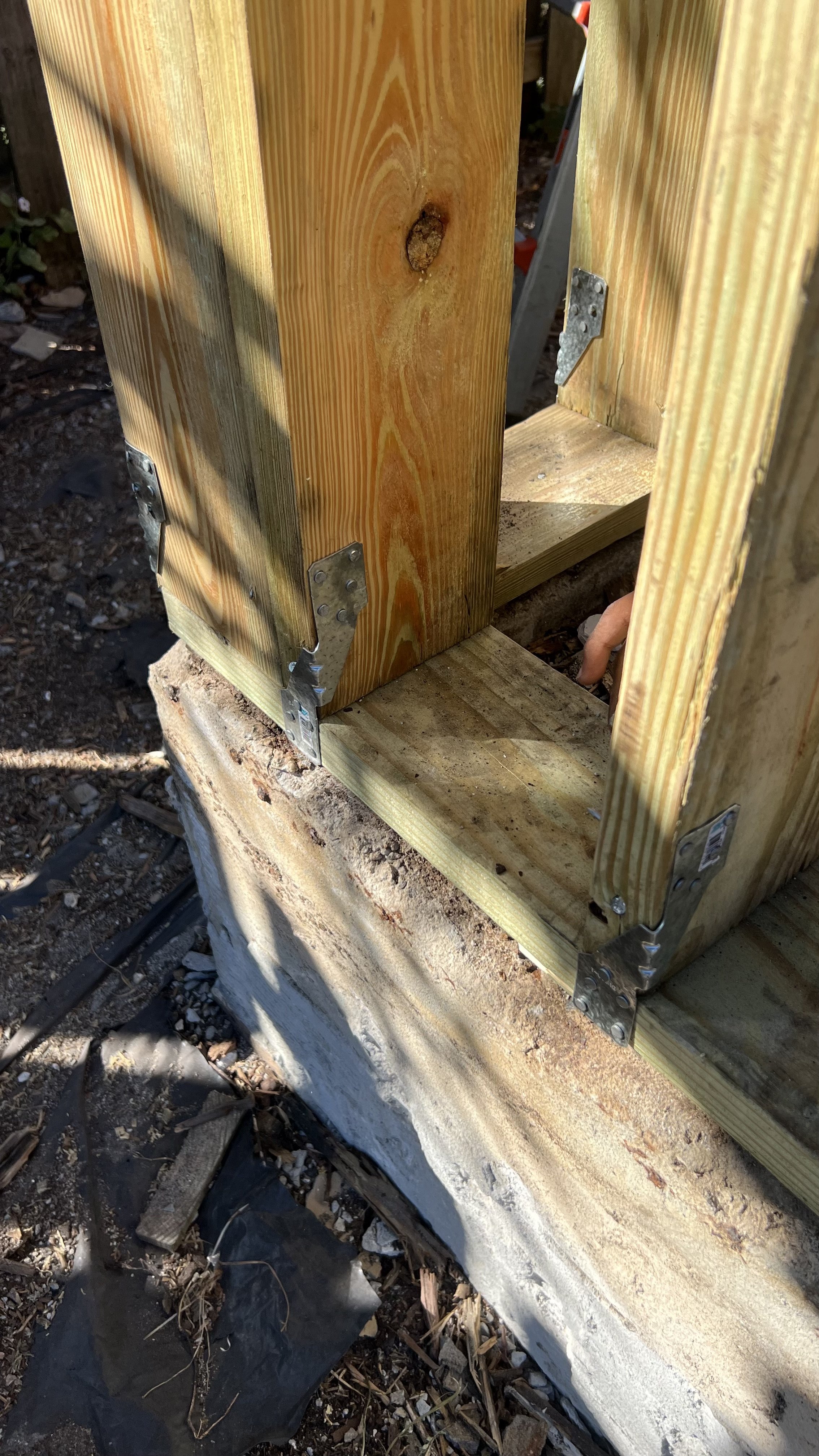
02 Field inspection of structural hurricane straps for added reinforcement of frame tie-down.
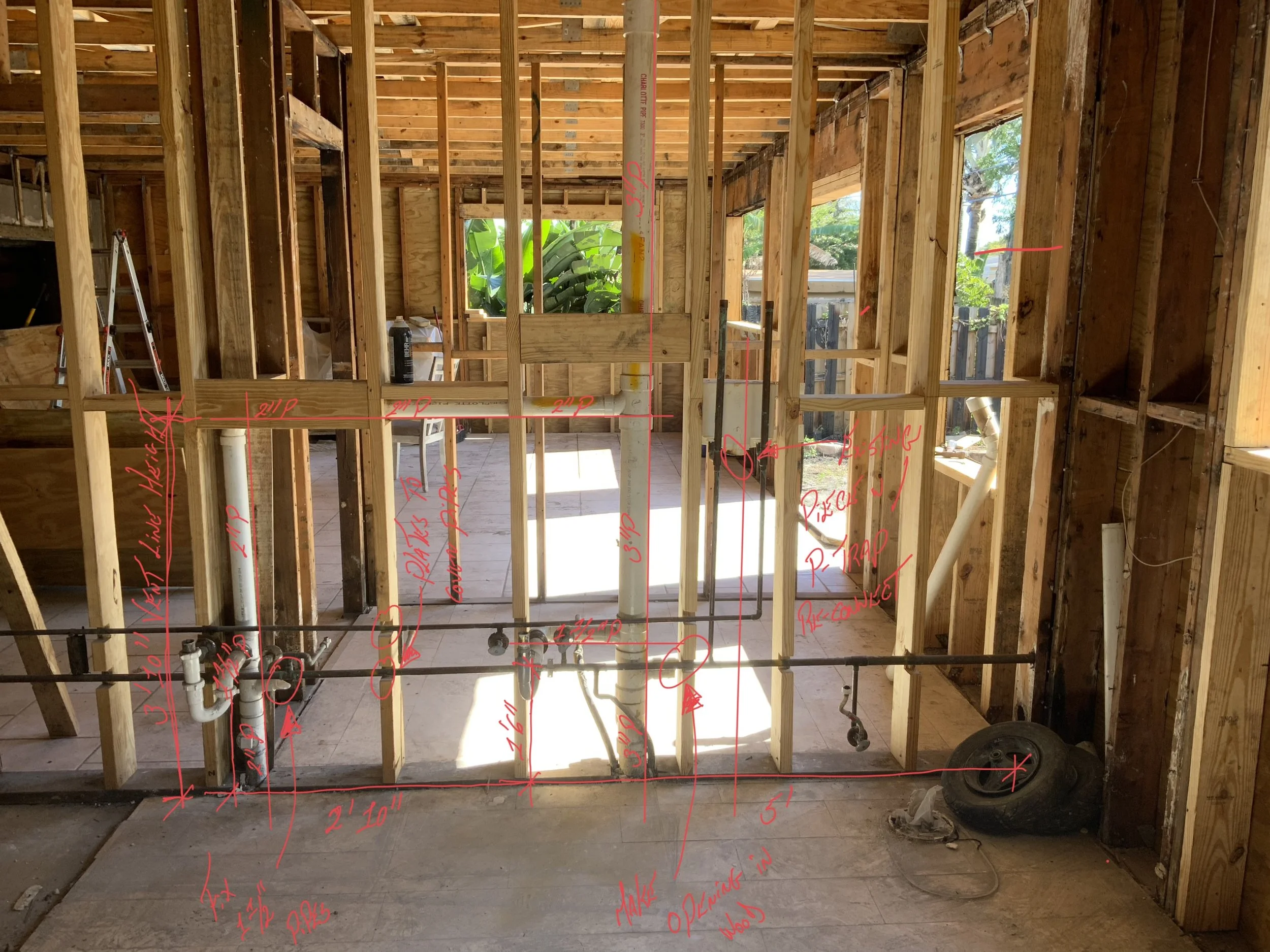
03 Field supervision of structural framing and plumbing build-out according to plans design.
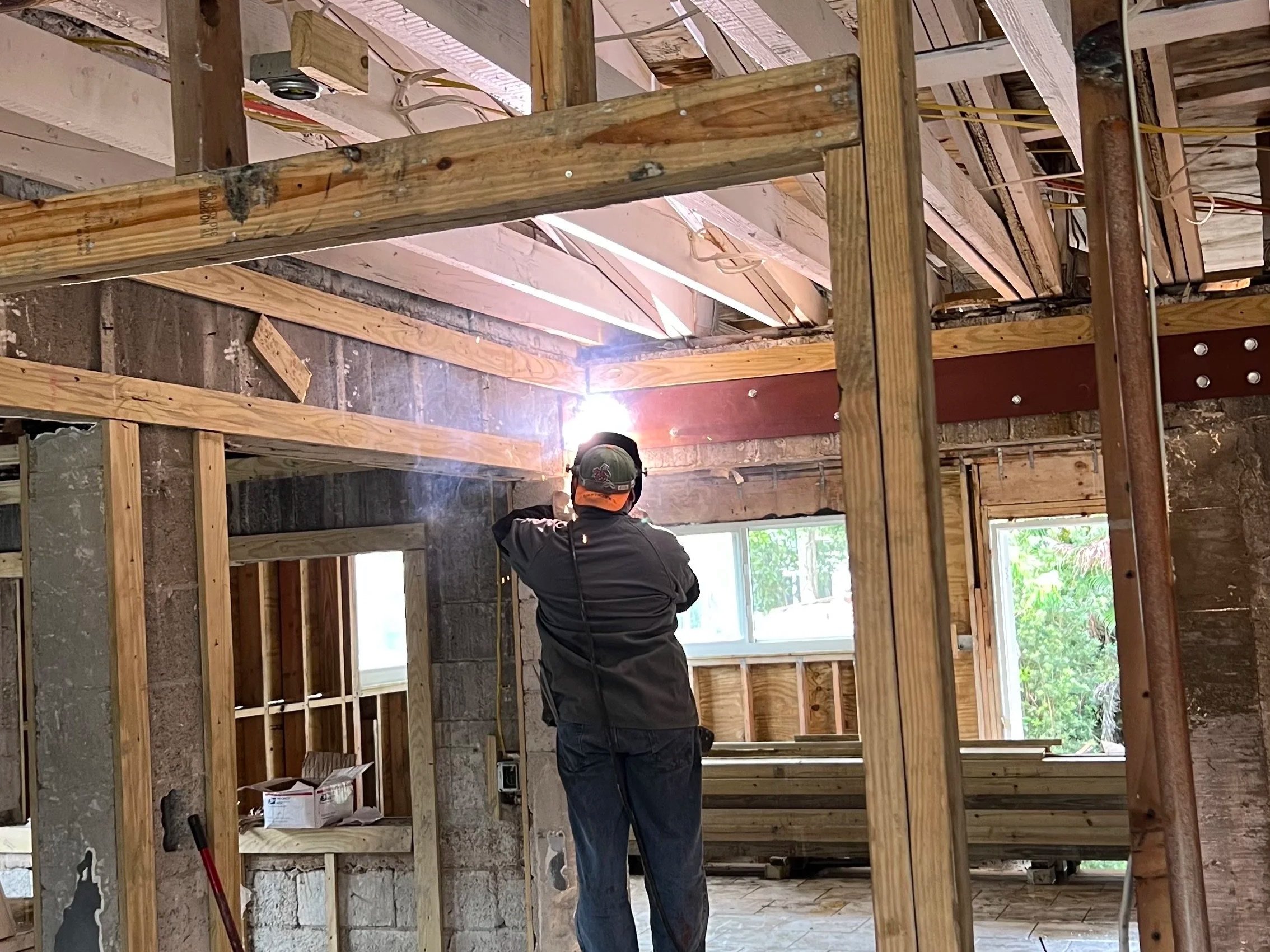
Steel plates to reinforce CMU build and opening width at thresholds.
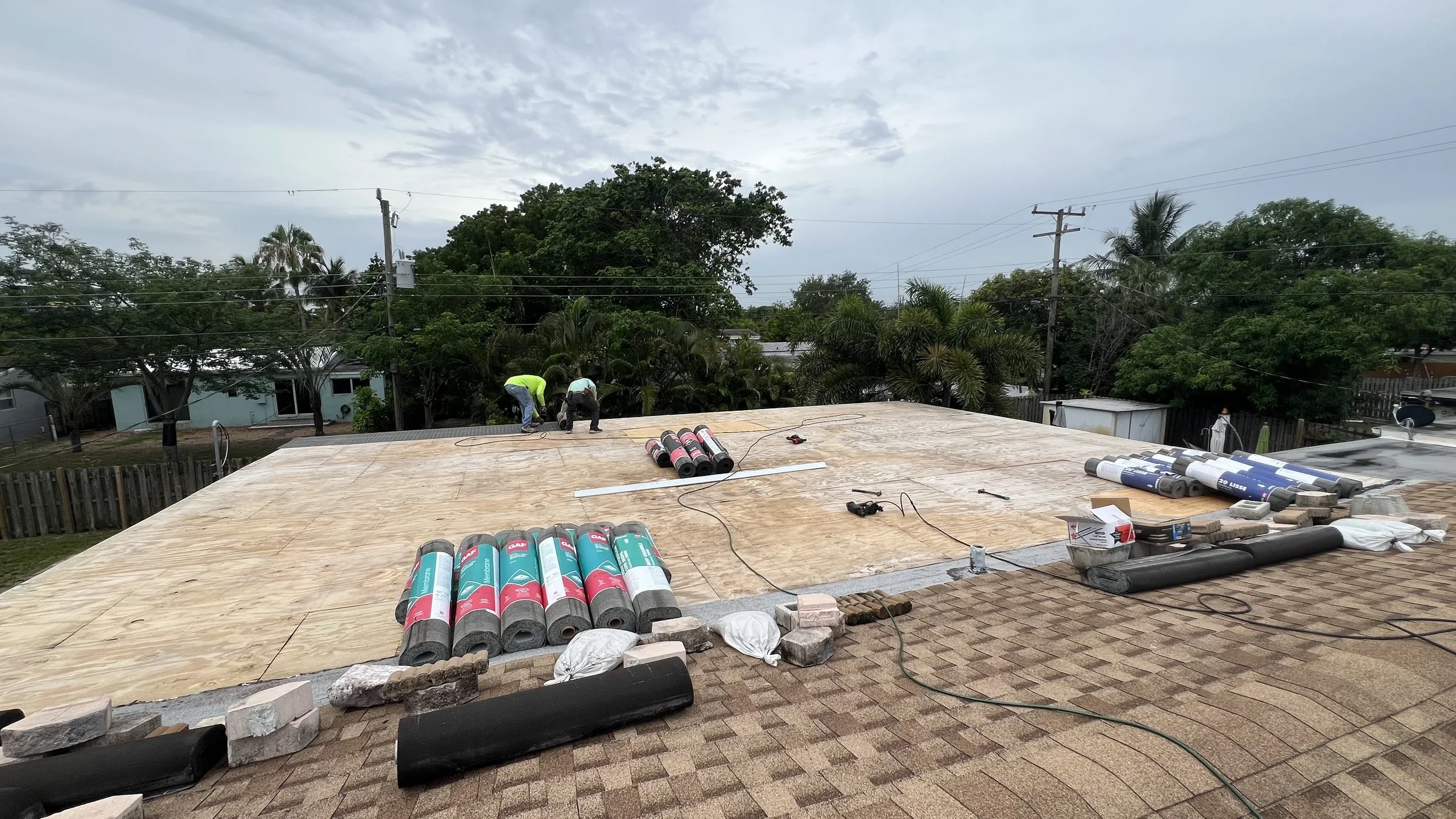
Low slope roof build out supervision.
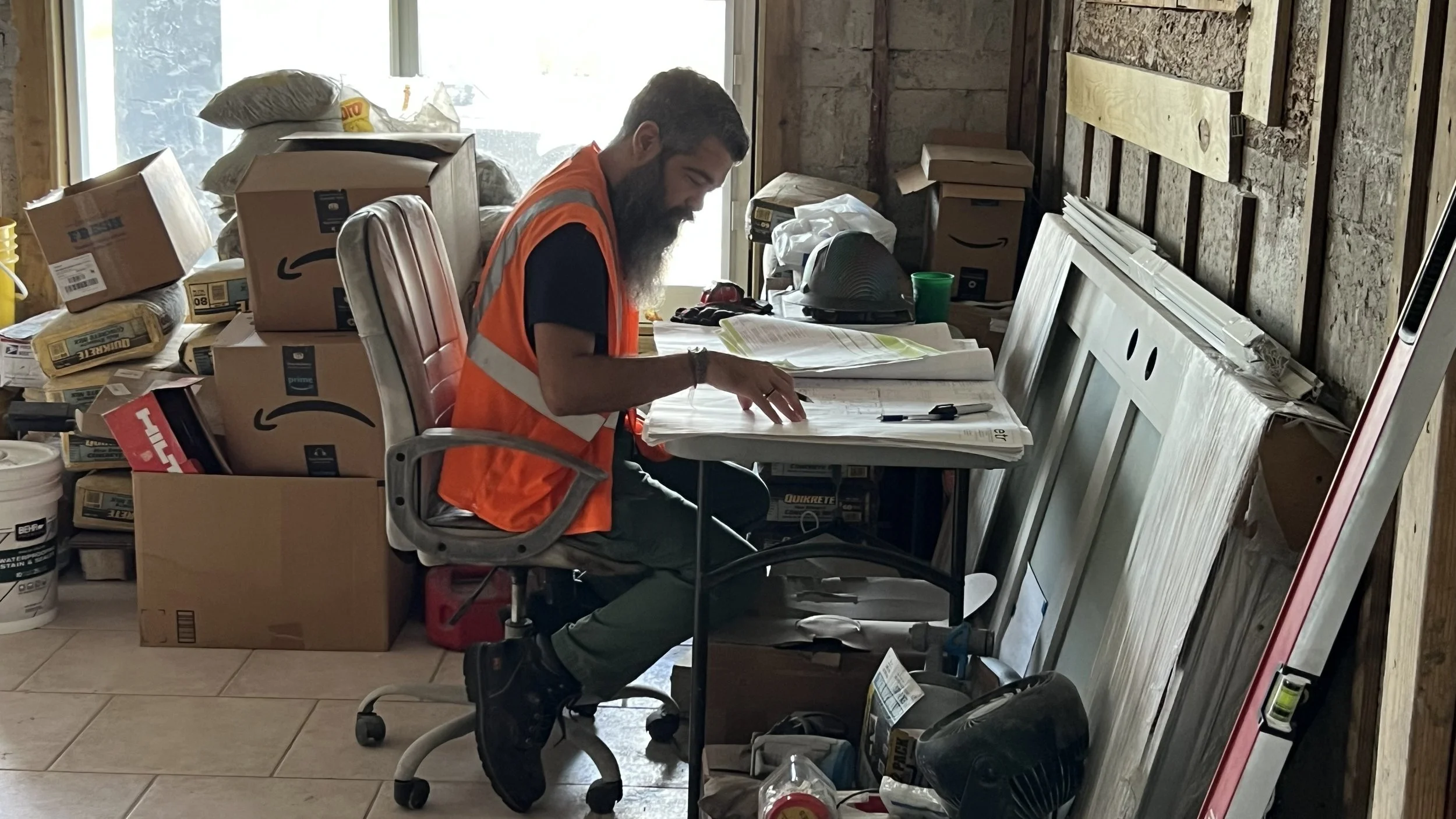
On-site coordination of design specs and work line items.
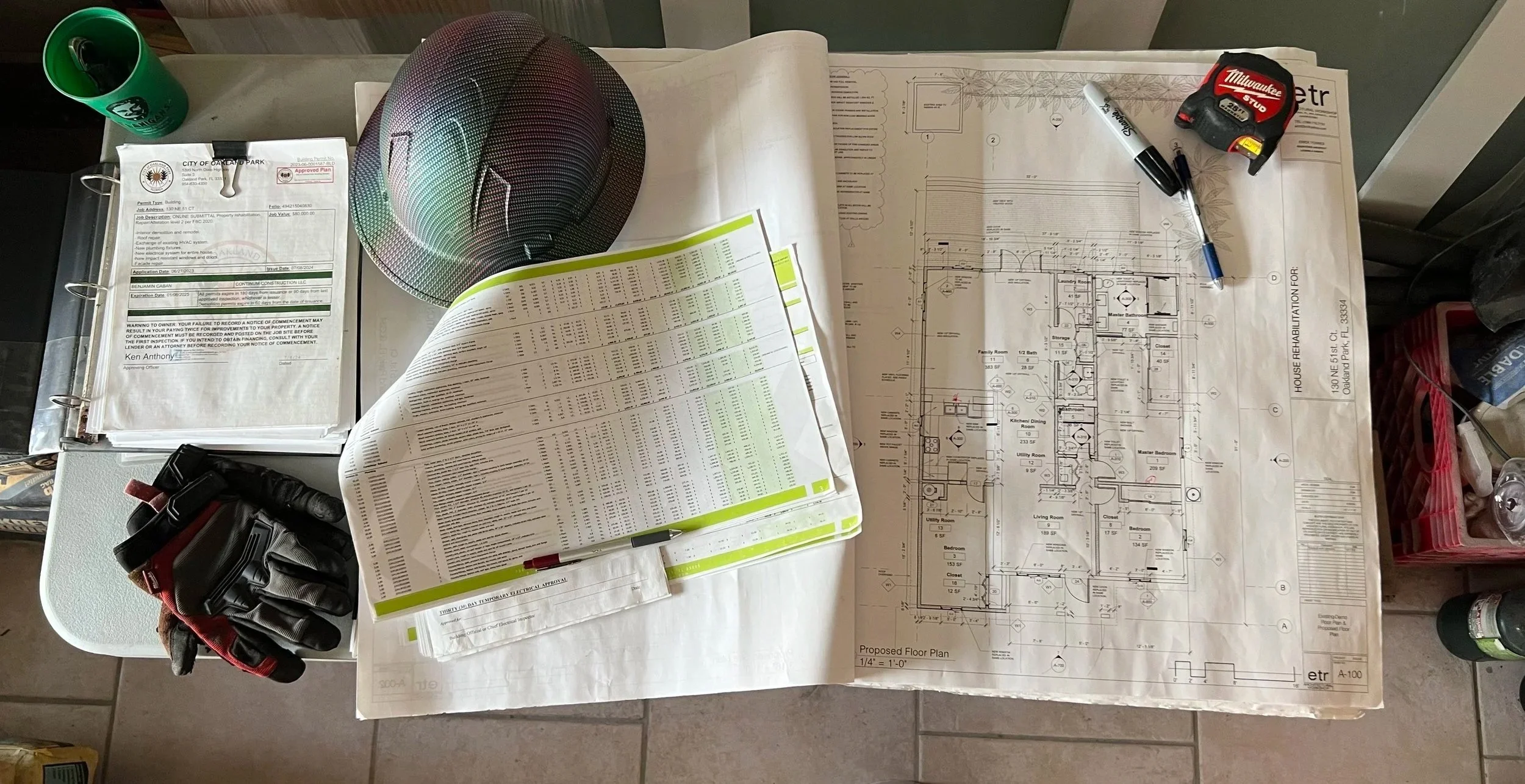
Approved permit, project construction budget and constructions documents.